Floor Levelling
We level floors prior to tiling, removing dips and high spots so tiles sit flush and won't crack or rock underfoot.
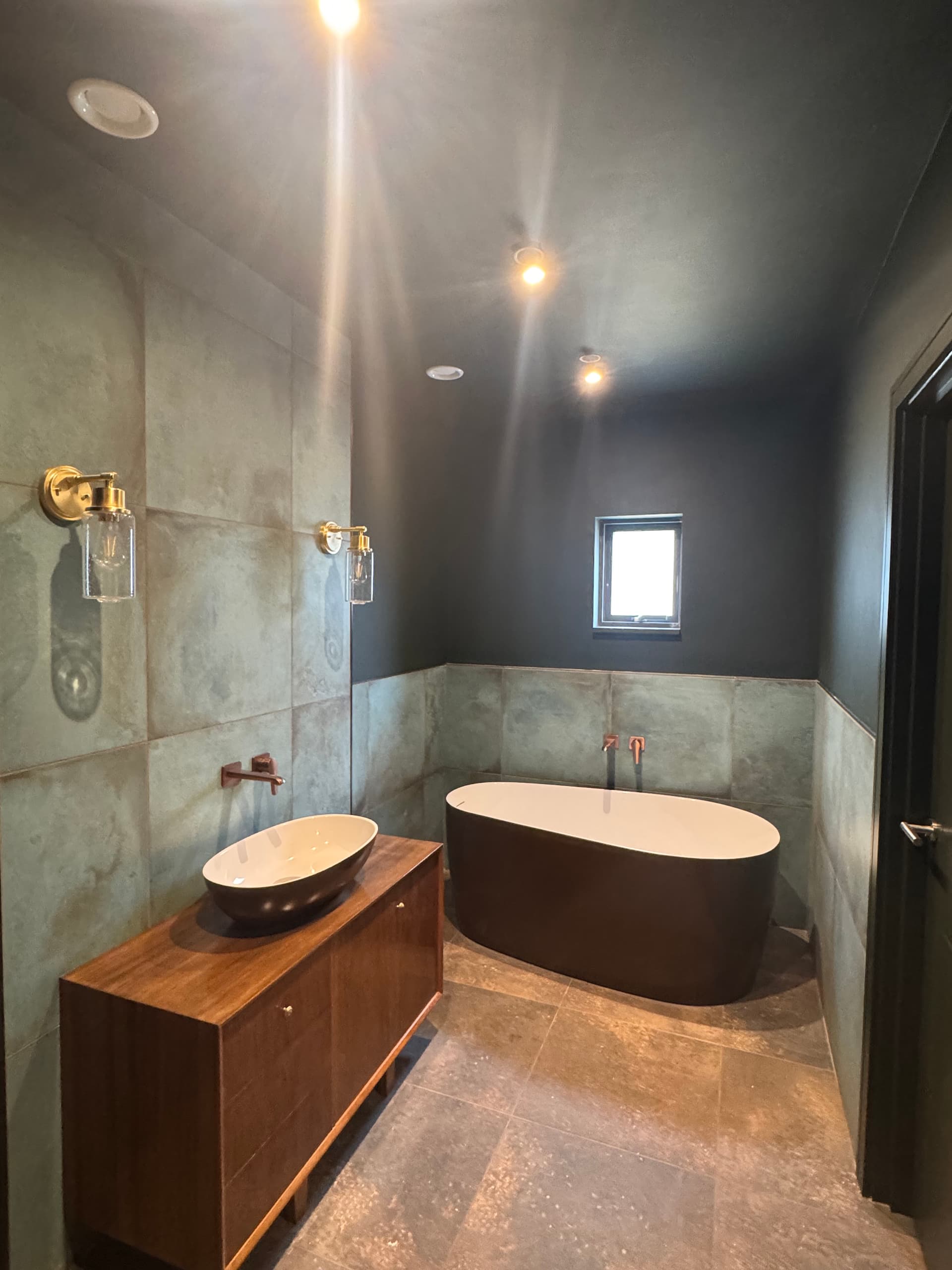
A solid, level substrate is the foundation of any tiling job. If your floor has dips, high spots, or slopes, tiles won't sit flush—they'll rock underfoot, grout lines will crack, and the whole installation will fail prematurely, no matter how well the tiles themselves are laid.
We assess the floor and identify where it's out of true, then level it using self-levelling compound, cement screed, or patching as the job demands. For minor variations we might use a thin-set mortar bed; for more substantial unevenness, a proper screed gives us the control to bring everything to a consistent plane. The goal is straightforward: a surface that's flat enough that tiles will sit evenly and won't move.
This matters most in kitchens and bathrooms, where water pooling around uneven tiles causes problems later, and in larger floor tiling projects where slopes become visible and uncomfortable to walk on. It's equally important on commercial work—a pub or shop floor needs to be safe and look right.
We carry out floor levelling as part of our broader tiling service across Binfield and the surrounding area, whether you're refurbishing a bathroom, laying a new kitchen floor, or installing underfloor heating. It's rarely the most visible part of the job, but it's the part that determines whether your tiles will last and perform properly.
If you're planning a tiling project and aren't sure whether your floor needs levelling, we can survey it and advise. Sometimes a small amount of unevenness is manageable; sometimes it needs addressing before we even begin. Either way, we'll be honest about what's needed and what it costs.
What customers say
What customers say
Real reviews from real customers.
5.0average across 6 reviews
Interested in floor levelling?
Tell us about the job— we'll come back with a quote.